Try to cover the entire surface in front of you with the kite and dart tiles so that there are no gaps between them. This is callled tiling a surface. Notice that this can only happen if the kites and darts are arranged in specific ways. These are known as the "matching rules."
If you succeed in doing the tiling properly, you will notice that the tiling is not the same at different places.
You can check out the Gallery menu item for some examples, if you need them.
If you want a harder challenge, try to make the tiling using the unmarked side of the tiles, and see if you can figure out the matching rules.
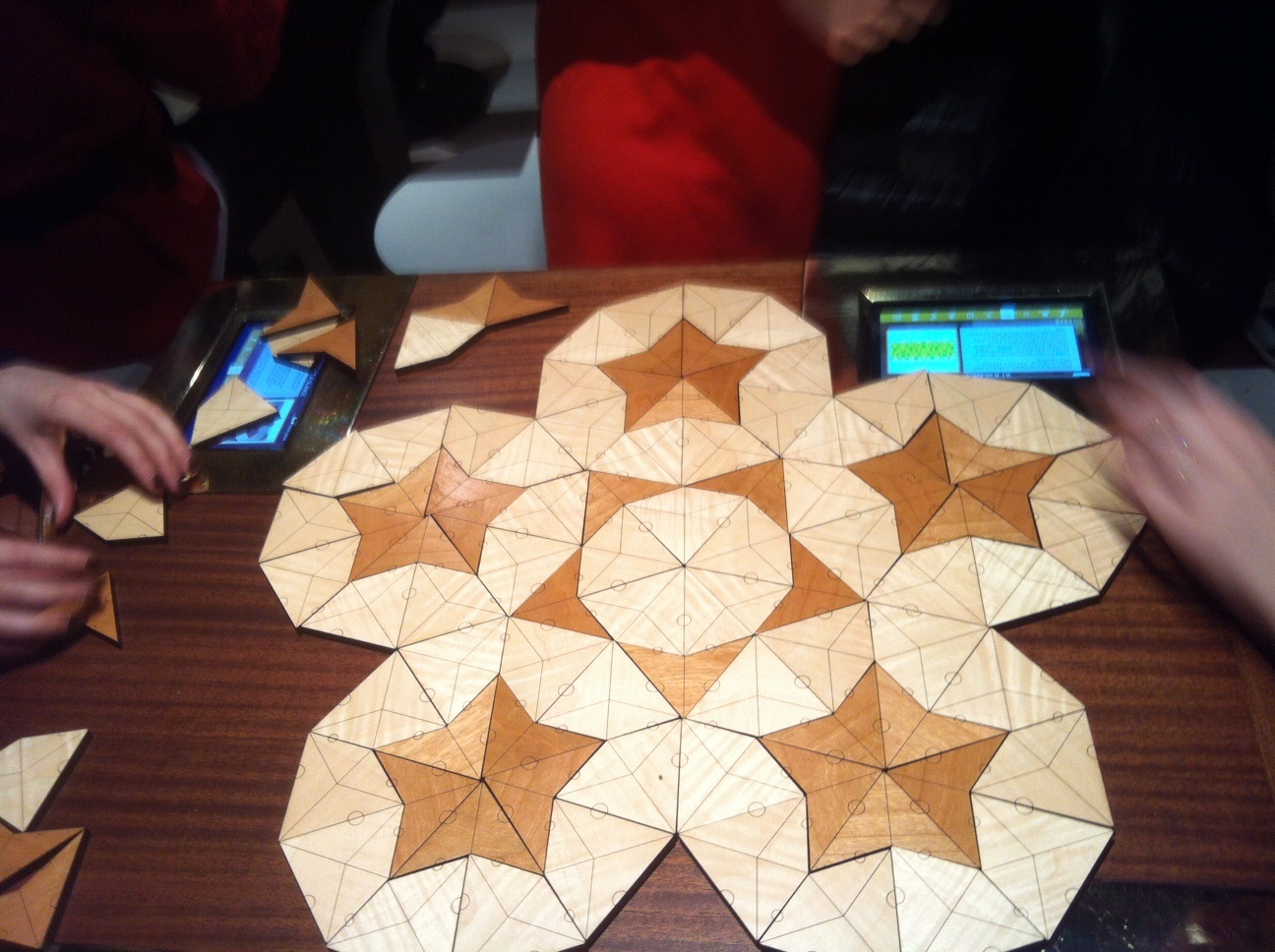
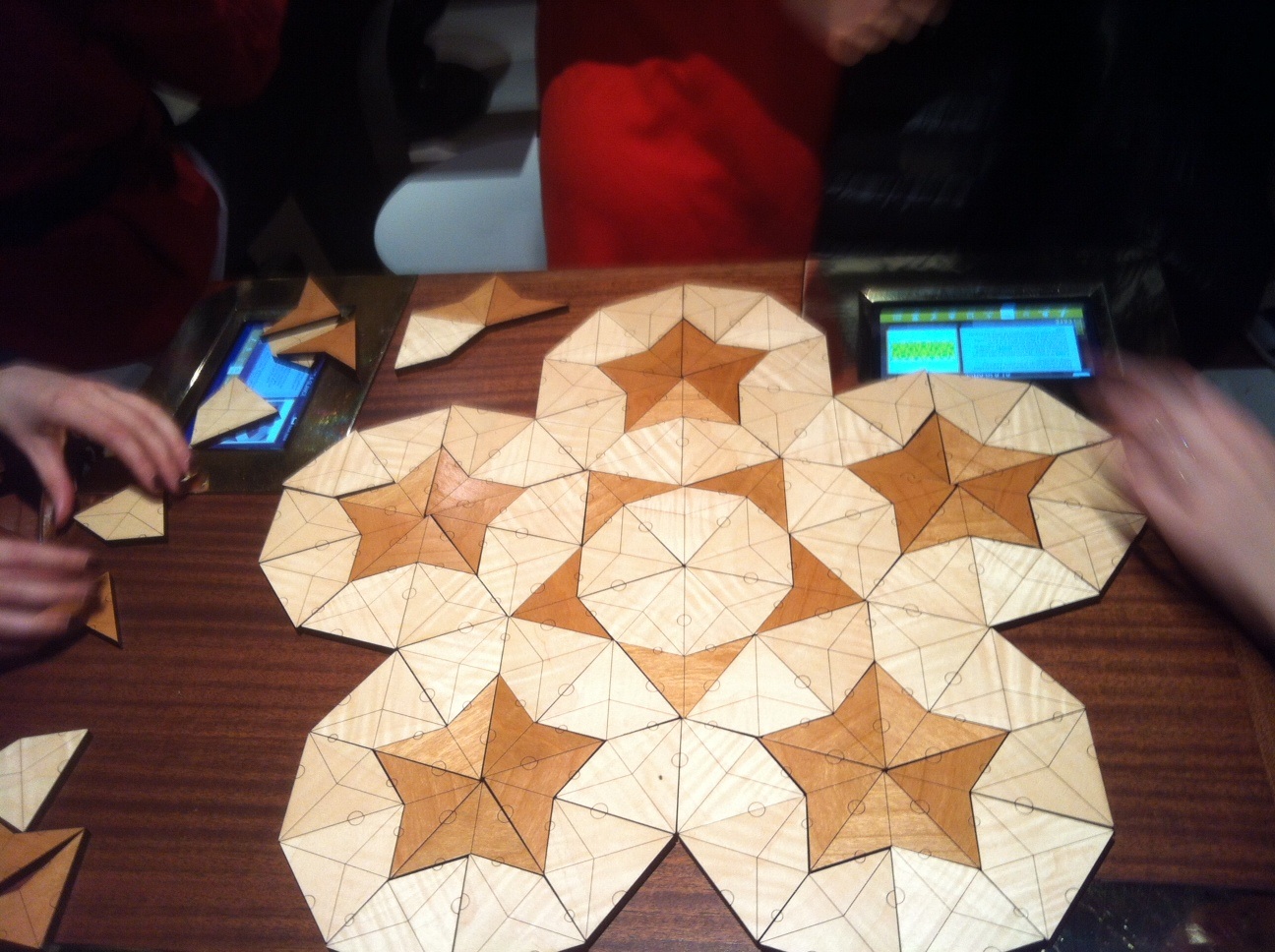
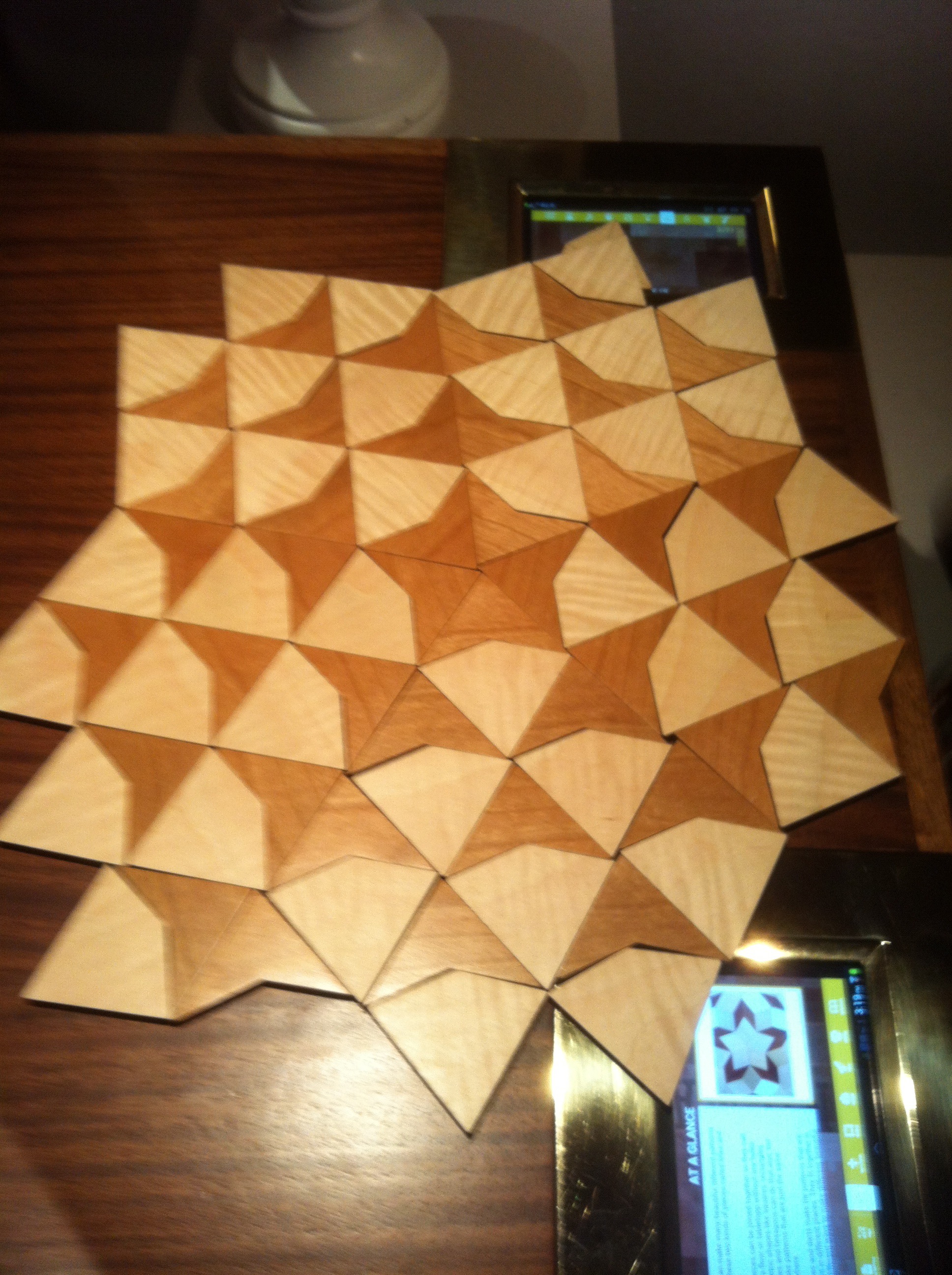
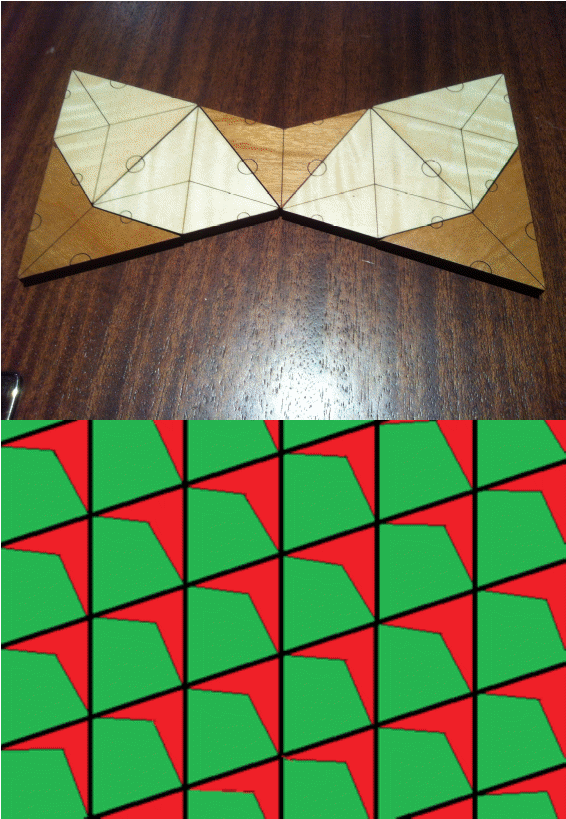
The picture shown follows the matching rules in the center but not at the edges. So it cannot be made into a complete tiling.
Here are Penrose's Rules to create aperiodic tilings. Let's call them Set A (matching rules):
A. 1. Edges of the same length must be matched together
A. 2. The little circle markings on the tiles must always be paired up on either side of a boundary.
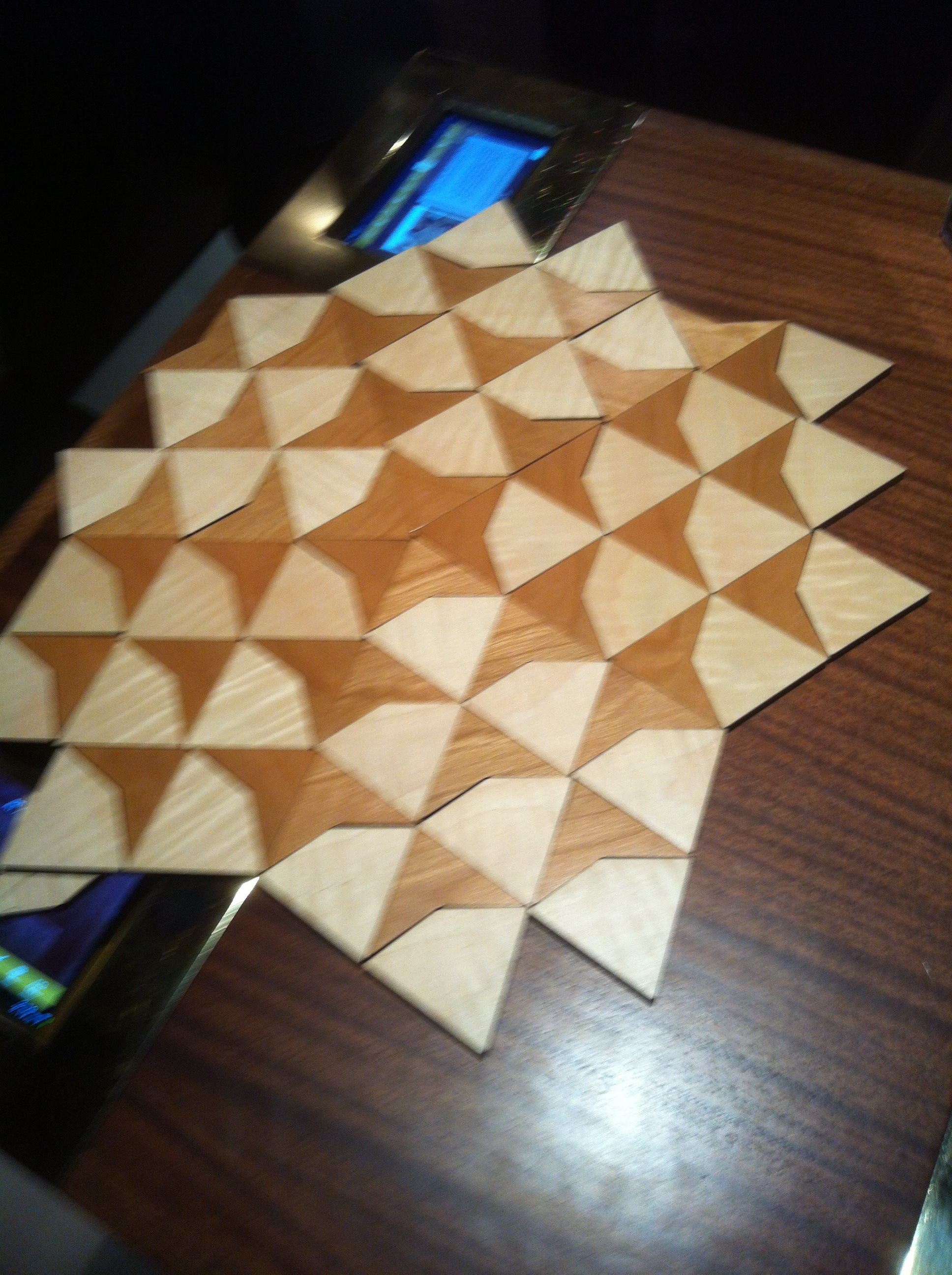
The Set A rules (illustrated at top in a pattern called the long bow tie) allow you to create aperiodic tilings. However, satisfying the rules is not enough - sometimes you have to use the right type of tile (kite or dart) to continue the tiling. The use of a particular tile is forced by the tiles around it.
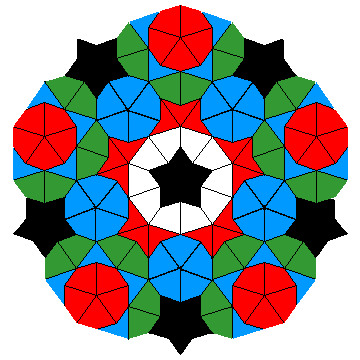
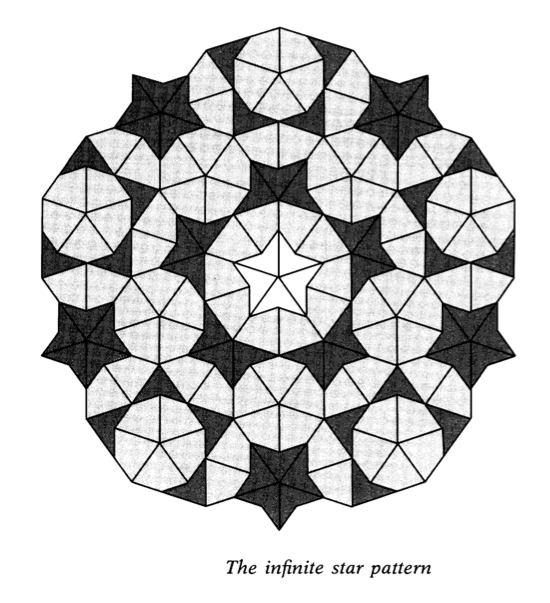
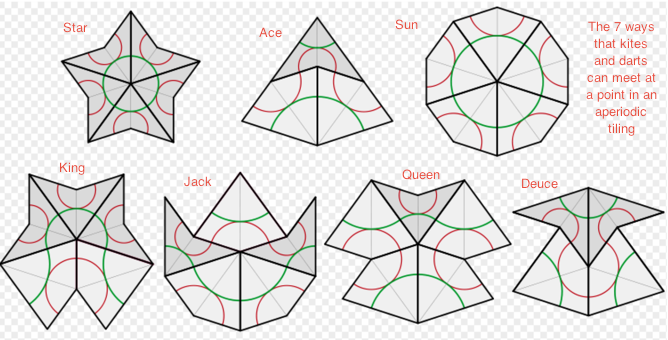
The matching rules limit the ways that the kites and dats can come together at a point to 7 different configurations that are named the ace, deuce, jack, queen, king, sun or star (see Gallery picture). Some of these have an "empire" around them in which the tiling is forced.
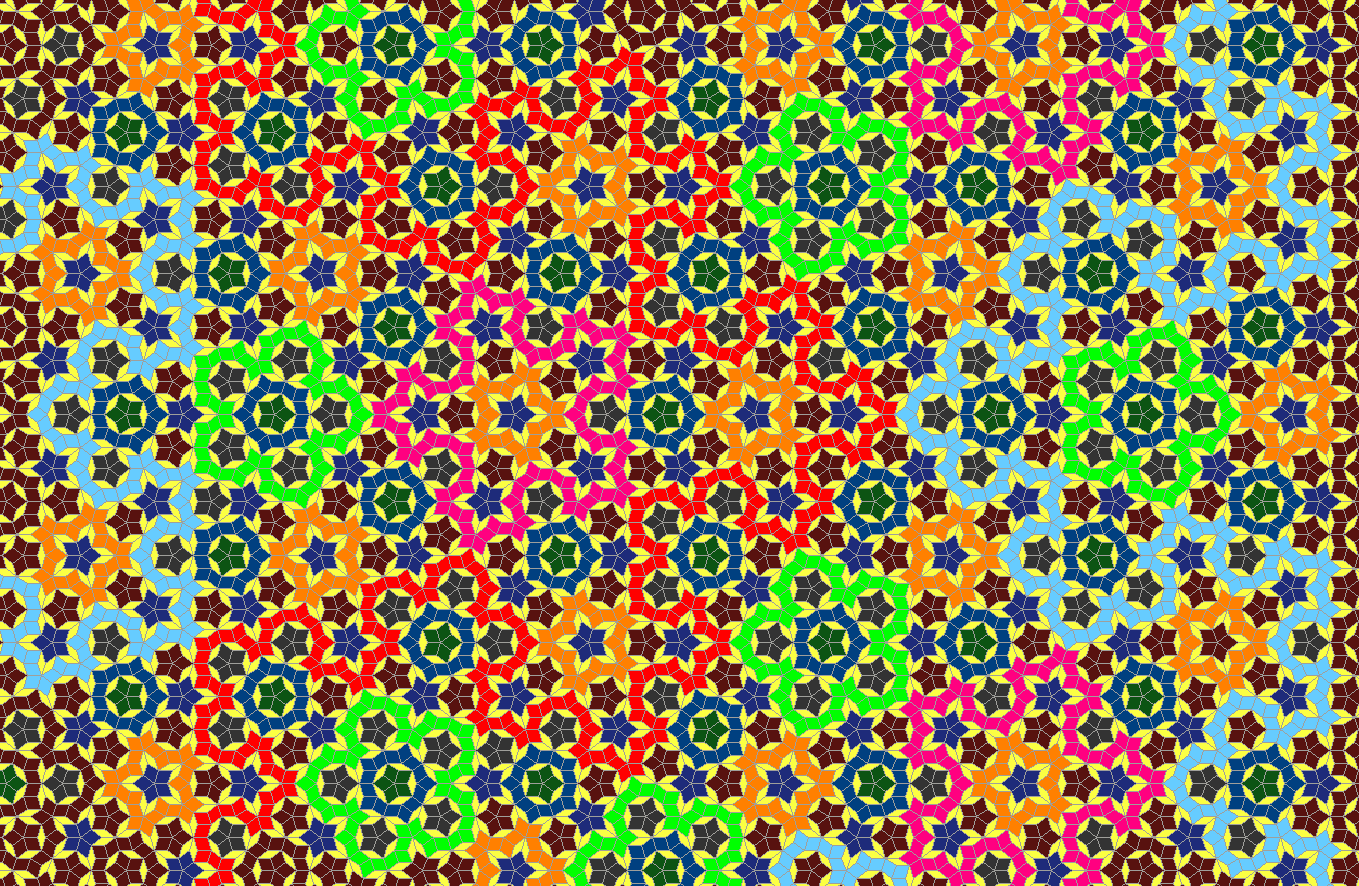
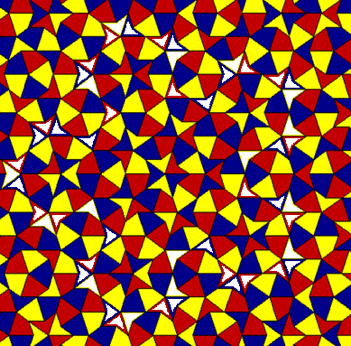
If you follow a different set of rules (Set B), you can create periodic tilings, but not aperiodic ones. The possibilities for tilings are relatively limited and uninteresting (bottom picture).
B.1. Edges of the same length must be matched together
B.2. The markings are never paired together on either side of a boundary.
Try to devise other rules, or mix the two sets of rules and see what happens. You will find that you can't tile the plane fully. Only a small number of pieces can be fit together before reaching a point where nothing can fit.
You can make many beautiful different patterns with these two kinds of pieces called Kites and Darts.
The pieces can be joined together so they can cover a floor or tabletop without any holes. Geometric shapes like squares, rectangles, triangles and hexagons can do that also, but they usually make patterns that are just the same everywhere. You can take one part of the pattern and move it sideways or up and down and find another place which has exactly the same pattern. So the pattern repeats - it is "periodic".
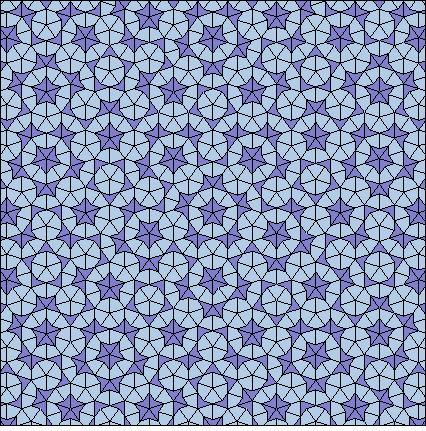
The kites and darts can fit together in many ways to make beautiful tilings without any holes. Moreover, when certain rules are followed, they only make tile patterns that are different in different places. Unlike other geometric tilings, you cannot move the pattern to the left or right or up and down and make it fit itself. The name for this property is "aperiodic". Kites and darts are special shapes that together can make such unique tile patterns. The fact that just two types of pieces can make aperiodic tilings when certain "matching rules" are followed was first found by the mathematician Roger Penrose, and hence these tilings are known as "Penrose Tilings".
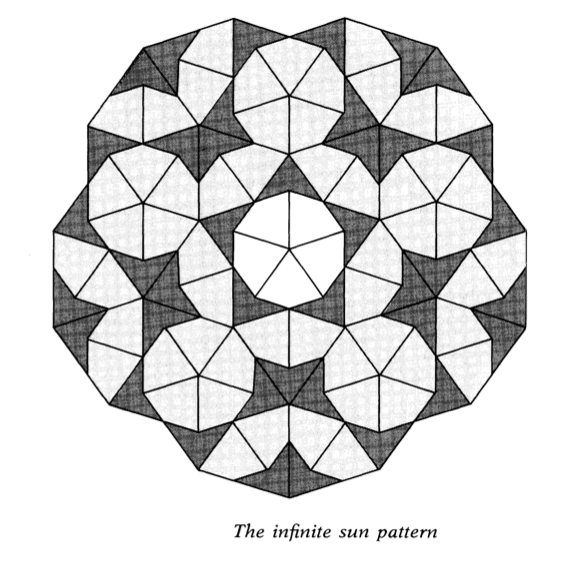
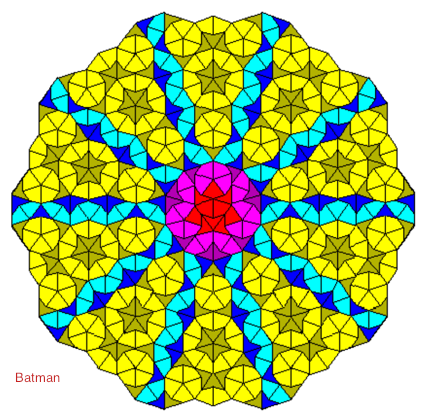
The pattern shown in the picture is just one of the tilings it is possible to make with kites and darts. It was made by previous visitors to the Enigma Cafe, and is very similar to a pattern called the "The Infinite Sun."
Wouldn't you love to have tiled walls or floors like this?
Try making your own aperiodic tilings with the Kites and Darts. The possibilities are infinite!