The Tetraxis is an original, MoMath branded interlocking puzzle. Each of the twelve component
pieces is interchangeable and reversible, fitting into the completed puzzle in exactly the
same way as every other one. The sticks all interlock without intersecting, symmetrically
surrounding a space with twelve sides. The internal magnets serve as a guide to assembly,
allowing each piece to be placed with a satisfying snap. The finished Tetraxis puzzle is a
highly organized and stable equilibrium of forces, a balance of push and pull.
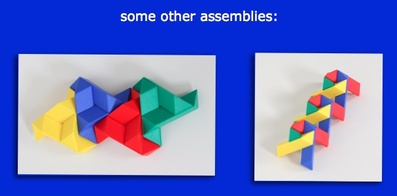
The Tetraxis pieces can also be used to create other 3-D structures, some of which are shown
in these pages.
The Tetraxis puzzle is an invention of John and Jane Kostick.
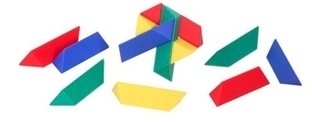
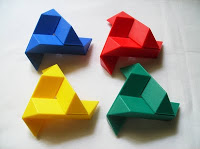
Try making pinwheels of 3 and 4 pieces as shown.
Some more complicated shapes are shown on the next challenge page.
Choose a challenge
Choose a challenge
Choose a challenge
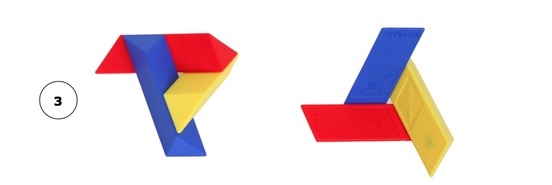

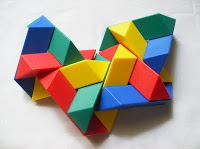
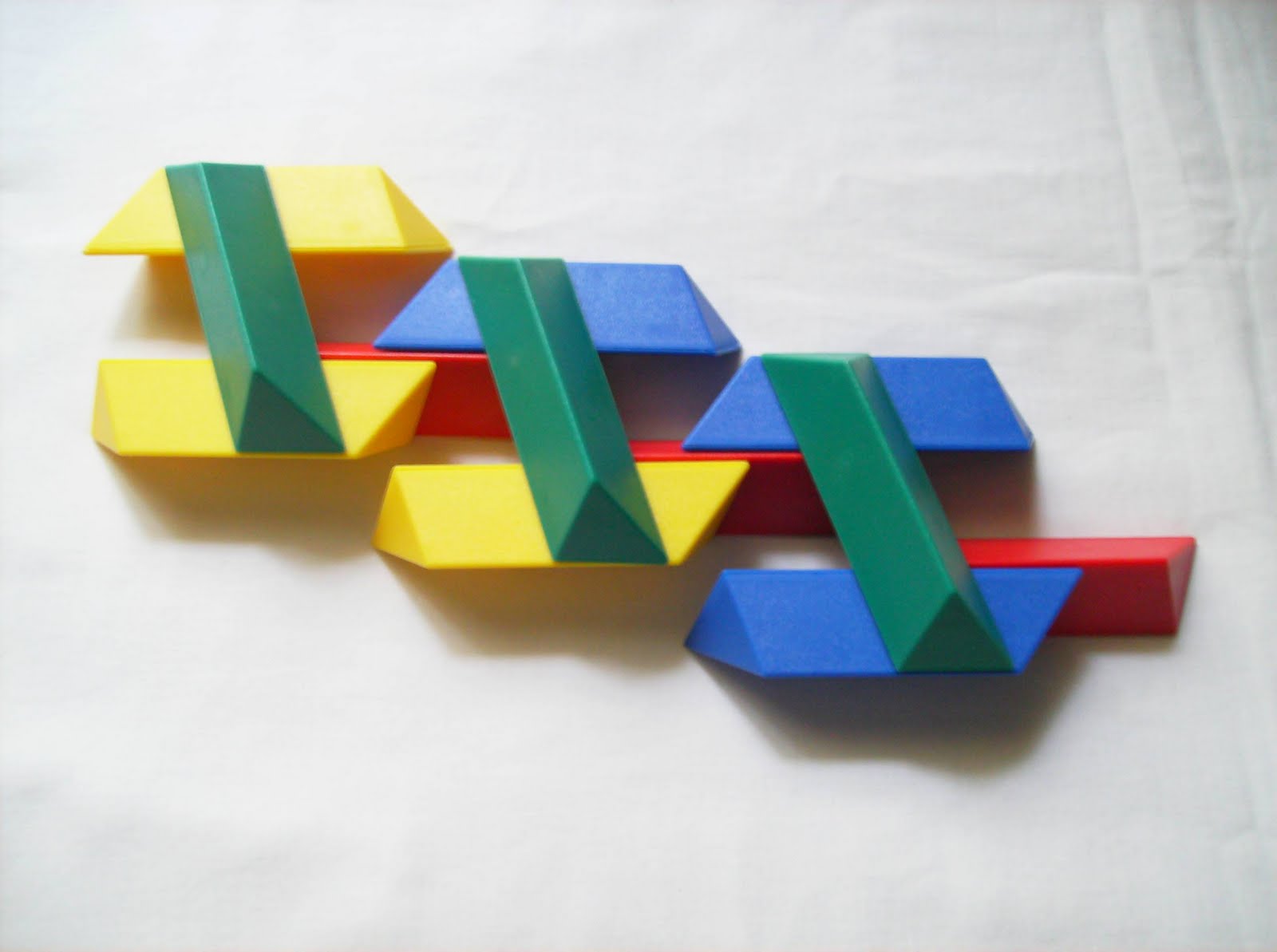
There are a couple of ways you can assemble the Tetraxis.
One way is to create a 3-piece pinwheel as shown in Challenge 1.
Make 4 of these.
Now try to make them join together one by one to form the Tetraxis.
Or you can make just one pinwheel and start joining additional pieces to it one piece at a time, as shown in the subsequent pages.
To the 3-piece pinwheel, add one piece to make a 4-piece pinwheel. Then add another piece.
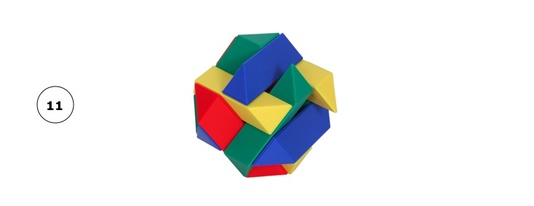
To the 5 stick assembly add a stick to make it 6, and then another to make a seven piece asembly.
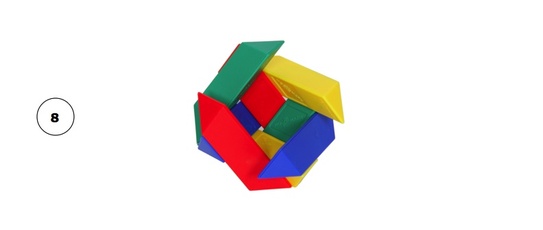
On to 8 and 9 pieces
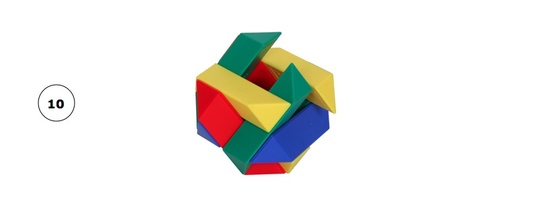
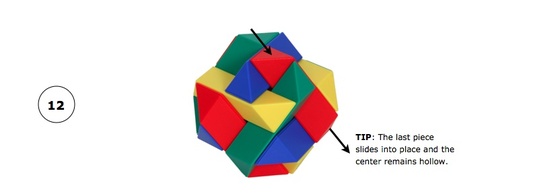
The final step - insert the last piece.
Note that it slides into place and the center remains hollow.





The Tetraxis is an original, MoMath branded interlocking puzzle. Each of the twelve component
pieces is interchangeable and reversible, fitting into the completed puzzle in exactly the
same way as every other one. The sticks all interlock without intersecting, symmetrically
surrounding a space with twelve sides. The internal magnets serve as a guide to assembly,
allowing each piece to be placed with a satisfying snap. The finished Tetraxis puzzle is a
highly organized and stable equilibrium of forces, a balance of push and pull.
The Tetraxis pieces can also be used to create other 3-D structures, some of which are shown
in these pages.
The Tetraxis puzzle is an invention of John and Jane Kostick.
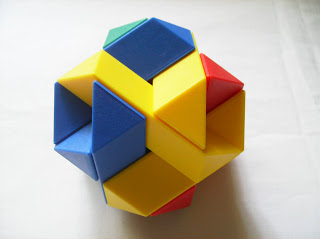
When you finish the Tetraxis, the central space will be enclosed inside a shape that has 12 sides (faces), 14 corners (vertices), and 24 edges. The shape is called a rhombic dodecahedron.